We Find It. We Fix It. Southern California’s Licensed Leak Specialists.
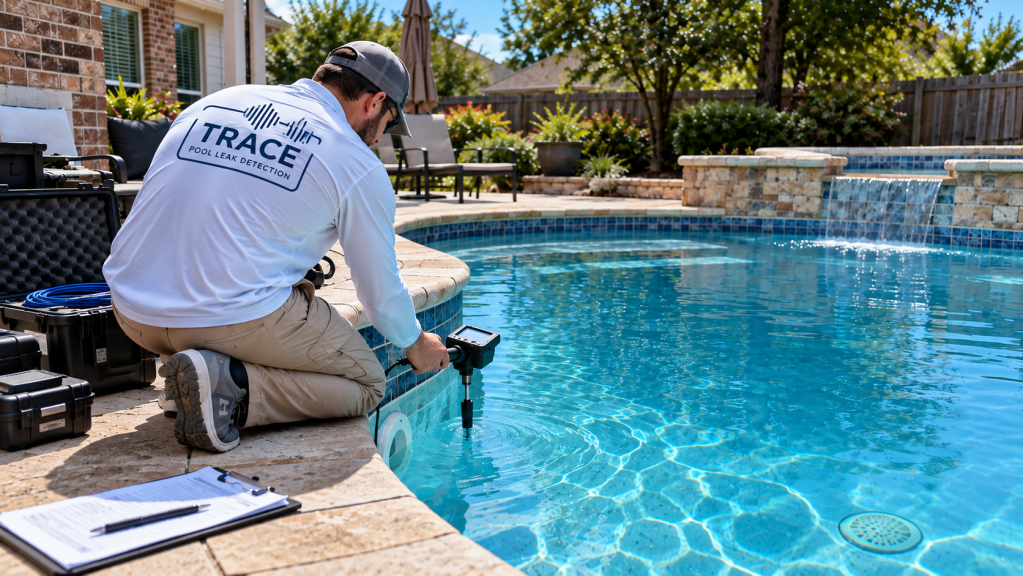
Beyond watching the water line drop, swimming pools exhibit secondary symptoms when subterranean leaks occur. Look for these warning signs:
You hear water constantly running at the equipment pad or your water bill has unexpectedly spiked.
A suction-side leak pulls air into the system, visible through the clear lid on your pool pump.
Unexplained wet spots in the grass near the pool deck or equipment pad.
Escaping water washes away the sub-base beneath your patio, causing slabs to heave or settle.
Dilution from constant refilling forces you to use twice as much chlorine, acid, and salt as normal.
The constant introduction of untreated tap water makes it impossible to maintain a stable chlorine residual.
Structural movement caused by soil erosion will pop tiles off the bond beam.
Plenty of leak calls turn into a guessing game: open the deck, look, open more deck. We do not work that way. Detection comes first, the source gets confirmed, and only then does anyone pick up a tool. We use five methods, used in order, each one narrowing the search.
We evaluate the shell, fittings, the equipment pad, and the ground around the pool. A surprising number of leaks are visible to a trained C-53 contractor who knows where to look.
With the pump off and the water completely still, we use SCUBA equipment to release concentrated dye near suspected failure points (like light niches and skimmer throats). The dye is drawn directly into cracks too fine for the naked eye to see.
Each plumbing line (suction, return, main drain, water features) is isolated and taken to pressure on its own. This tells us exactly which line is failing, rather than guessing at the entire hydraulic system.
Water escaping a pressurized underground line makes a distinct acoustic sound. Using high-frequency ground microphones, we listen through soil and concrete to pinpoint the exact location of the break.
For deep or microscopic breaks, we purge the lines with an inert tracer gas and use a surface molecular sniffer to detect where the gas escapes through the patio.
A pool leak does not stay a pool leak.
Water moving continuously through the soil undermines the deck, which is how homeowners usually notice the second symptom: cracking and settling around the pool. This escaping water can reach home footings and hardscape. It washes out the base beneath the gunite shell, which quickly turns a simple plumbing repair into a major structural failure.
All the while, the pool is losing treated, heated water continuously. Your water chemistry will never hold because every time the auto-fill runs, it dilutes your chlorine and cyanuric acid, leading to rapid algae growth.
The repair you put off in October becomes a much bigger, more expensive repair in March.
If your pool is losing more than about a quarter-inch of water a day, you have a leak rather than evaporation. Before you call us, you can confirm this with a simple test.
Turn off your auto-fill valve and pool pump.
Place a 5-gallon bucket on your pool step and fill it with pool water so it matches the water level of the pool outside the bucket.
Mark the water level on the inside of the bucket, and the water level on the outside of the bucket.
Wait 24 hours.
If the pool water level drops significantly more than the water inside the bucket, you are losing water to a leak, not evaporation.
Accurate diagnostics require trade-level hydraulics knowledge. TRACE Pool Leak Detection operates out of Montclair,California, under the strict regulatory standards of the California Contractors State License Board.
Led by Anthony, a licensed professional with 15 years of specialized pool industry experience and a Certified Pool Operator (CPO) designation, we approach every basin with commercial-grade precision. When we execute a pressure test or calculate dynamic head loss, it is backed by certified training and active C-53 credentialing. We are fully bonded and insured, ensuring your property is protected from the moment we step into your backyard until the concrete is poured back perfectly flush.
TRACE found a tiny leak in my return line that I never could’ve spotted myself. Quick testing, clear explanation, and the water level has stayed perfect ever since.
Finding the leak is only half the job. Because we are fully licensed C-53 contractors, our in-house technicians execute the heavy-duty structural and plumbing repairs required to permanently stop the water loss.
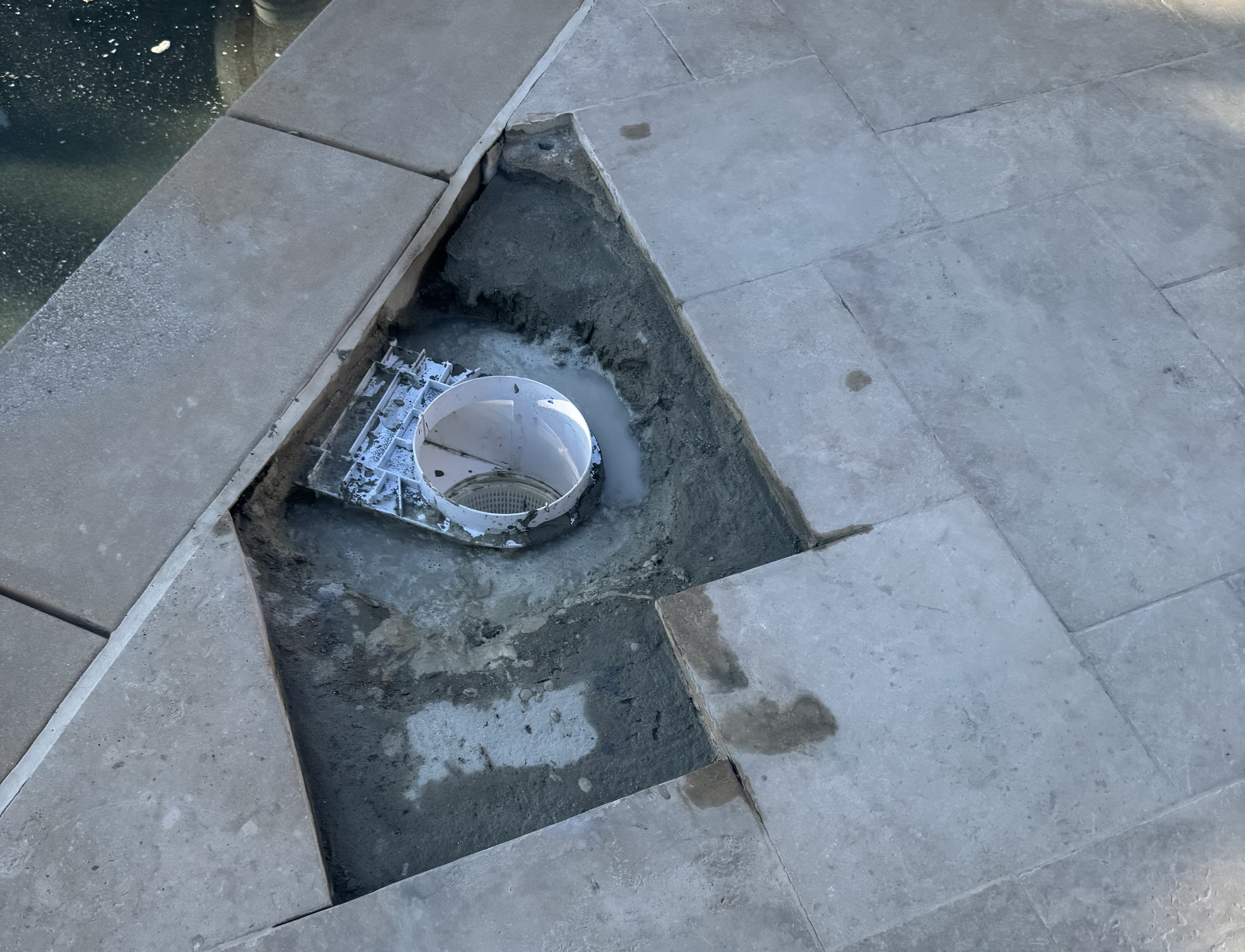
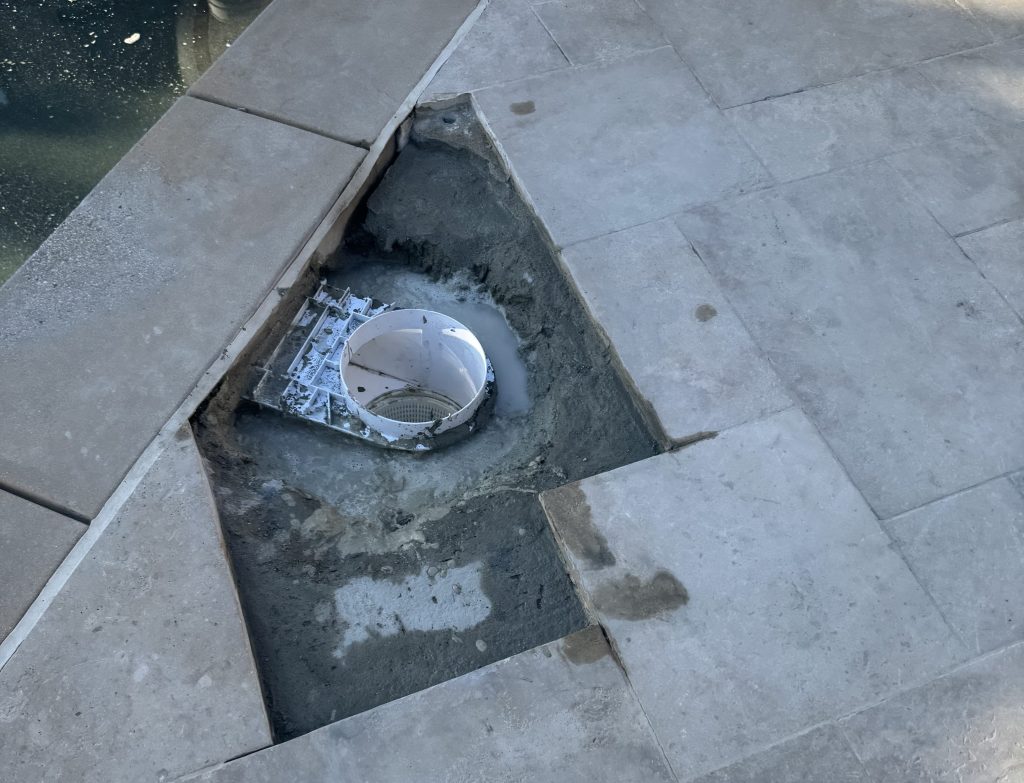
A separating skimmer throat is one of the most common leak vectors in Southern California. We perform complete skimmer replacements, tearing out the cracked housing, installing a new unit, tying in the PVC, and matching the deck and waterline tile perfectly.
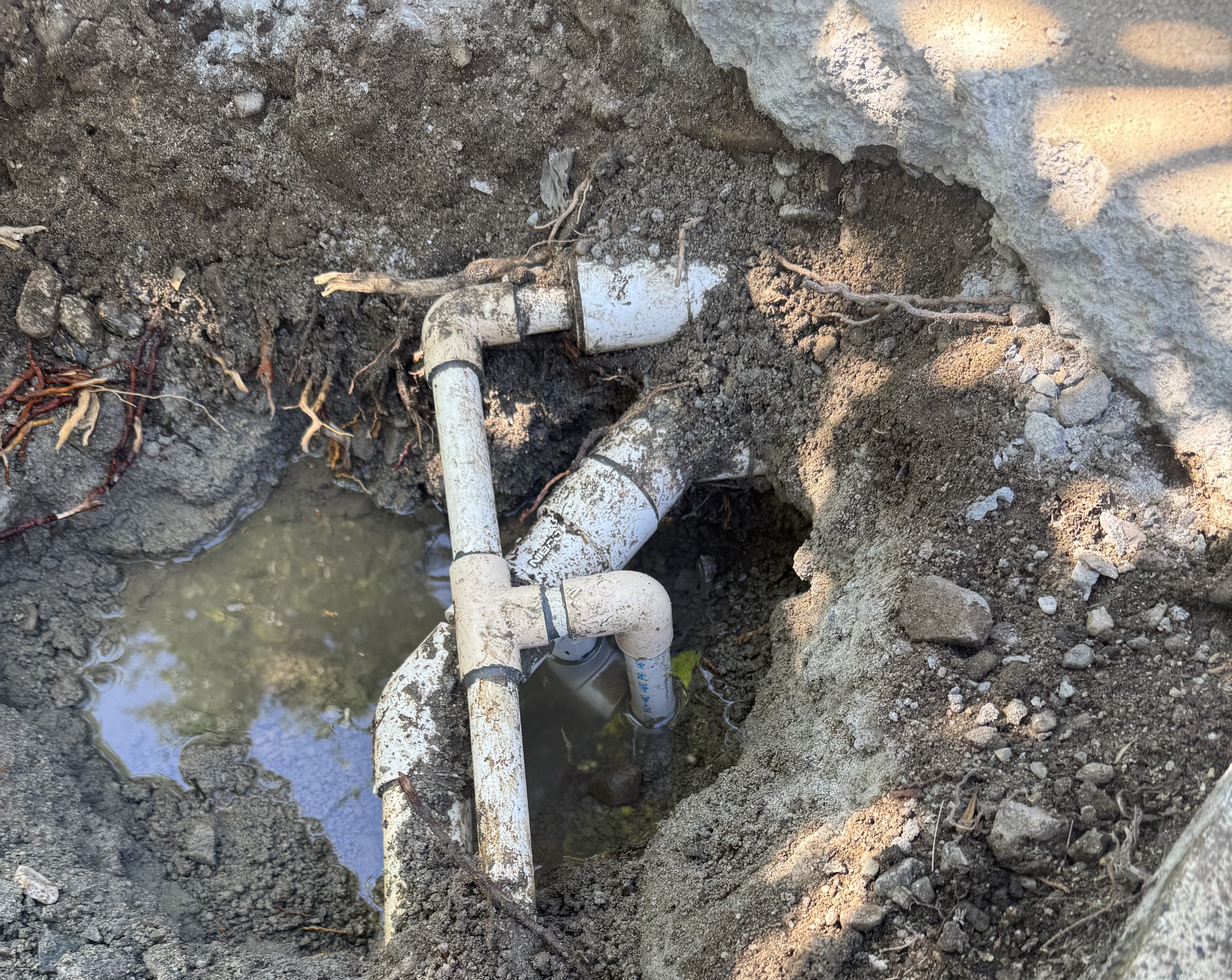
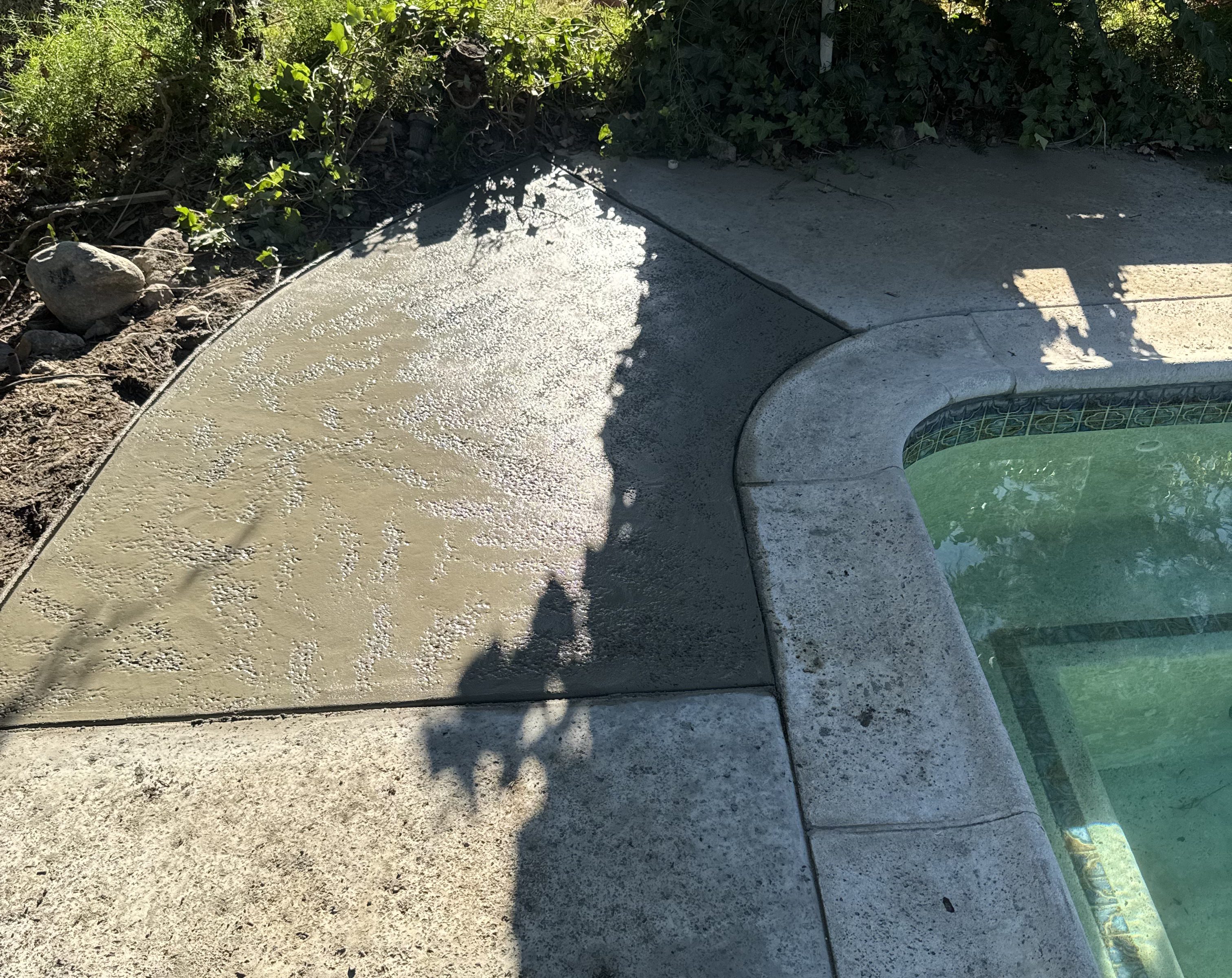
When tree roots or soil settlement snap an underground PVC return or suction line, we surgically cut through the concrete deck, replace the broken plumbing with schedule 40 PVC, and restore the hardscape so you’d never know we were there.
Gunite pools can crack due to seismic activity or expansive clay soils. We repair structural fissures using high-tensile steel staples and waterproof epoxy injections, restoring the structural integrity of the basin before patching the plaster.

Water frequently escapes through the electrical conduit housing your underwater pool light. We seal compromised light niches and repair degraded conduit lines using specialized underwater epoxies and hydraulic cement.

After a structural fix or skimmer replacement, we perform expert patching on standard white plaster, quartz, and pebble aggregate surfaces, as well as replacing fallen or damaged waterline tile.
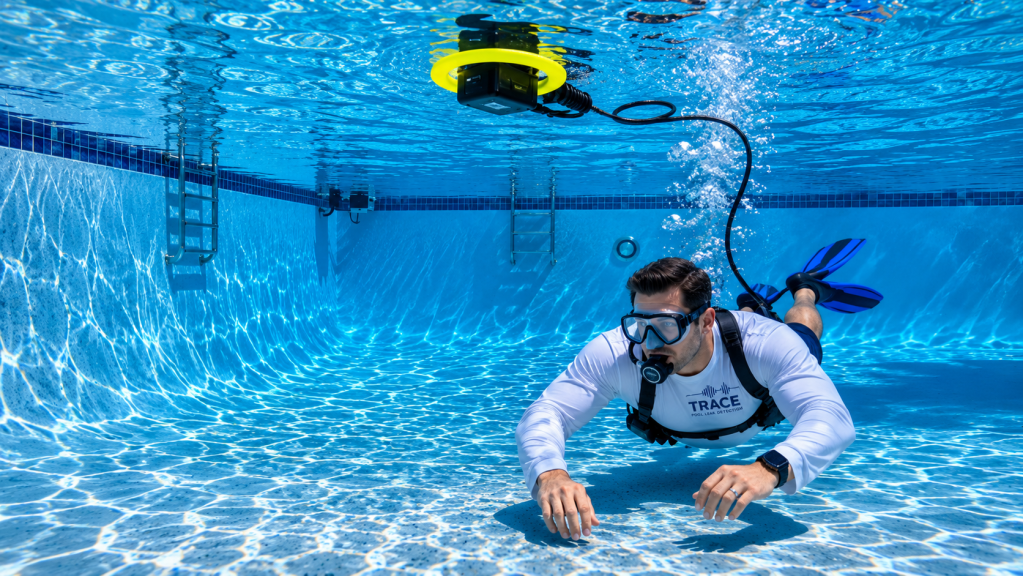
Headquartered in Rancho Cucamonga and Yorba Linda, California, TRACE Pool Leak Detection provides rapid-response diagnostics to residential homeowners, commercial aquatic facilities, and HOA property managers across the region.
No. Finding the leak is a 100% non-destructive process. We use electronic listening devices, ground microphones, and tracer gas to locate the leak through the concrete. We only cut into the deck once the leak’s exact location is confirmed,limiting the repair area to an isolated footprint (often just a 2×2 foot square).
Two-part epoxy putty is an excellent temporary bandage for small cracks inside a skimmer throat or around a light niche,but it is rarely a permanent structural fix. If the leak is underground in a PVC pipe or a major structural shell crack, putty will fail when the ground shifts.
Diagnostic pricing depends on the size of the vessel and the complexity of the plumbing (e.g., in-floor cleaning systems,attached spas, multiple water features). We provide flat-rate, upfront pricing for the detection phase before we begin work,ensuring no hidden fees.
Minor repairs, such as sealing a light niche conduit, replacing a hydrostatic valve in the main drain, or applying underwater epoxy to a cold joint, are often completed during the initial diagnostic visit. Major repairs, such as skimmer replacements or underground pipe excavation, require a scheduled structural repair visit and an itemized proposal.
If your pool loses water faster when the equipment is running, the leak is likely on the pressurized return lines. If it loses water faster when the equipment is off, the leak is usually on the suction side. If water loss is constant regardless of equipment operation, the shell, light niche, or skimmer is typically the culprit.